



Blog & News
- Show All
-
Back health
-
lower back pain
-
Treatments
-
Lumbar Spinal Stenosis
-
sciatica
-
Spine conditions
-
Lumbar Pain
-
spinal stenosis
Back Pain After an Epidural

Epidurals are prominent pain relief treatments for childbirth, surgery, and back pain; they involve injecting medication into the space around the spinal nerves in the lower back. Unfortunately, back pain is a prevalent epidural side effect: in a Medicina study, 30.38% of postpartum women who received epidural analgesia reported back pain in the days after delivery, and 31.65% of the epidural group still had back pain six months post-delivery.
Symptoms of Loose Screws After Spinal Fusion

In spinal fusion and other spinal procedures, hardware is essential for stability. Pedicle screws are commonly used to secure the vertebrae and encourage healing. Unfortunately, screw loosening is a prevalent complication of spinal fusion, occurring in up to 60% of patients.
What Are the Symptoms of L4-L5 Nerve Damage?

Lumbar nerve damage is a common cause of chronic lower back pain. Left untreated, it can pose the risk of permanent complications. The most common symptoms of L4-L5 nerve damage are lower back pain that radiates into the leg(s); numbness or tingling in the thigh, shin, or top of the foot; and weakness when lifting the foot or straightening the knee (called “foot drop”). In more severe cases, it can cause bladder or bowel dysfunction, sudden, severe numbness, and difficulty walking.
Lower Back Pain and Nausea: What’s the Connection and How to Find Relief

Nausea is never a welcome sensation. But when it occurs along with other symptoms, like lower back pain, you may worry that a deeper issue is at play.
Causes of Back Pain in Men

Back pain affects people of all ages and genders. Although back pain is more common in women than in men, it also affects a significant portion of the male population: In 2018, 28% of men and 31.6% of women experienced lower back pain in the last 3 months, according to a CDC survey. Given that back pain can lead to diminished mobility and a decreased quality of life, it should be given prompt medical attention.
What Causes Lower Back Pain in Females?

While lower back pain is a universal health concern, it’s been proven to affect women more often than men: In the results of a CDC survey, 31.6% of women experienced lower back pain in the last 3 months, compared to 28% of men. Although conditions like sprains, strains, and spinal conditions affect both men and women, menstruation, menopause, pregnancy, and gynecological conditions contribute to the higher prevalence of lower back pain in females.
Buttock Pain After Laminectomy: Causes, Treatment, and Recovery

Buttock pain after laminectomy is possible, particularly in patients who develop post-laminectomy syndrome or piriformis syndrome. Other possible causes include scar tissue formation, sacroiliac joint dysfunction, and weakened glute muscles. The root of your pain depends on the spinal level that was operated on, whether fusion was involved, and how effectively your body heals.
Scar Tissue and Chronic Pain After Spinal Fusion Surgery: Causes, Timelines, and Advanced Treatments

Scar tissue is your body’s normal response to tissue damage. It helps your body close wounds and recover. But when it develops in excess or too close to a nerve, it can trigger ongoing pain and compromise the benefits you expect to gain from spinal surgery. And if you’re affected, you’re not alone: persistent pain after spinal surgery has a prevalence rate of 14.97%, according to a meta-analysis from Cureus.
What Is a Spinal Fusion? Overview, Types, & Recovery Timeline
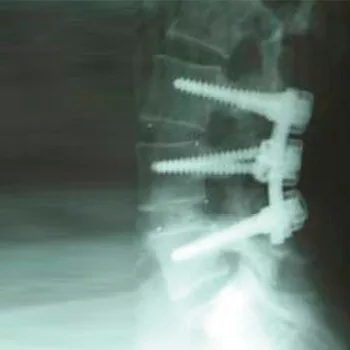
Spinal fusion is a type of spinal surgery that permanently joins two or more vertebrae (the bones that form the spine) into a single bone. This eliminates all motion at the affected spinal level, helping to reduce the pain, instability, or nerve compression associated with conditions like spinal stenosis, spondylolisthesis, or herniated disc. Over 400,000 spinal fusion surgeries are performed each year in the U.S. (according to The Spine Journal), making it one of today’s most common spine procedures.